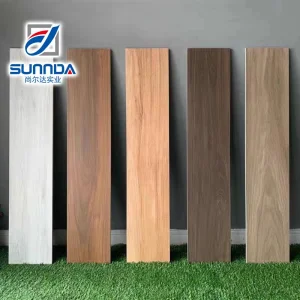
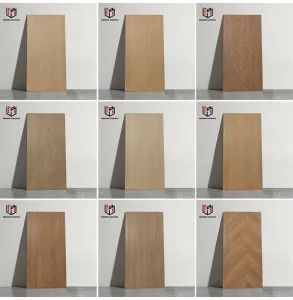
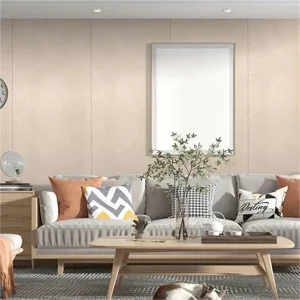
High-hardness materials engineered to resist wear, abrasion, and thermal stress in commercial applications.
In modern architectural design and heavy-duty commercial applications, surface durability is paramount. True scratch resistance is not merely a surface coating; it is an inherent physical property engineered at the molecular level. Sintered stones and high-performance porcelain tiles achieve this durability through a thermo-chemical manufacturing process known as sintering.
Sintering involves subjecting natural raw minerals—primarily quartz, feldspar, silica, and inorganic pigments—to extreme pneumatic pressure (exceeding 36,000 tons) followed by thermal processing in advanced kilns at temperatures surpassing 1200°C (2192°F). This process mirrors natural metamorphic rock formation but is accelerated to achieve absolute uniformity. The high heat and compaction fuse the minerals into a highly dense, non-porous matrix with a Mohs hardness rating typically between 7 and 8. This makes the material harder than steel, granite, and quartz composites, rendering it highly resistant to metal abrasions, impact, and deep scratching.
Exceeding the hardness of mild steel, protecting surfaces from scratches caused by cutlery, tools, and high-traffic debris.
Absorption rate lower than 0.05%, preventing liquid penetration, stains, and bacteria growth without requiring chemical sealants.
Immune to harsh acidic cleaning agents, industrial solvents, and degradation from direct sunlight/UV exposure.
Founded in Hangzhou, Hangzhou Rock Stone Co., Ltd. is a leading manufacturer specializing in ultra-thin sintered stone slabs, eco-friendly decorative tiles, and wall cladding solutions for both indoor and outdoor applications. With years of experience in the stone and ceramic materials industry, the company has established a reputation for high-quality, sustainable, and customizable products that meet diverse architectural and design needs.
At Hangzhou Rock Stone, OEM and custom solutions are at the heart of our service. Our in-house design and engineering teams work closely with clients to provide tailored sizes, finishes, and textures, ensuring every project achieves the perfect aesthetic and functional requirements. From large-format wall cladding to intricate indoor decorative patterns, we provide complete solutions that balance beauty, practicality, and sustainability.
Our dynamic OEM custom system accommodates custom specs, including variations in thickness (from 3mm ultra-thin to 20mm heavy-duty slabs) and surface finishes (such as high-gloss polished, soft matte, anti-slip grip, and structured 3D relief textures). Through this adaptability, we enable global designers and contract builders to realize their exact structural visions.
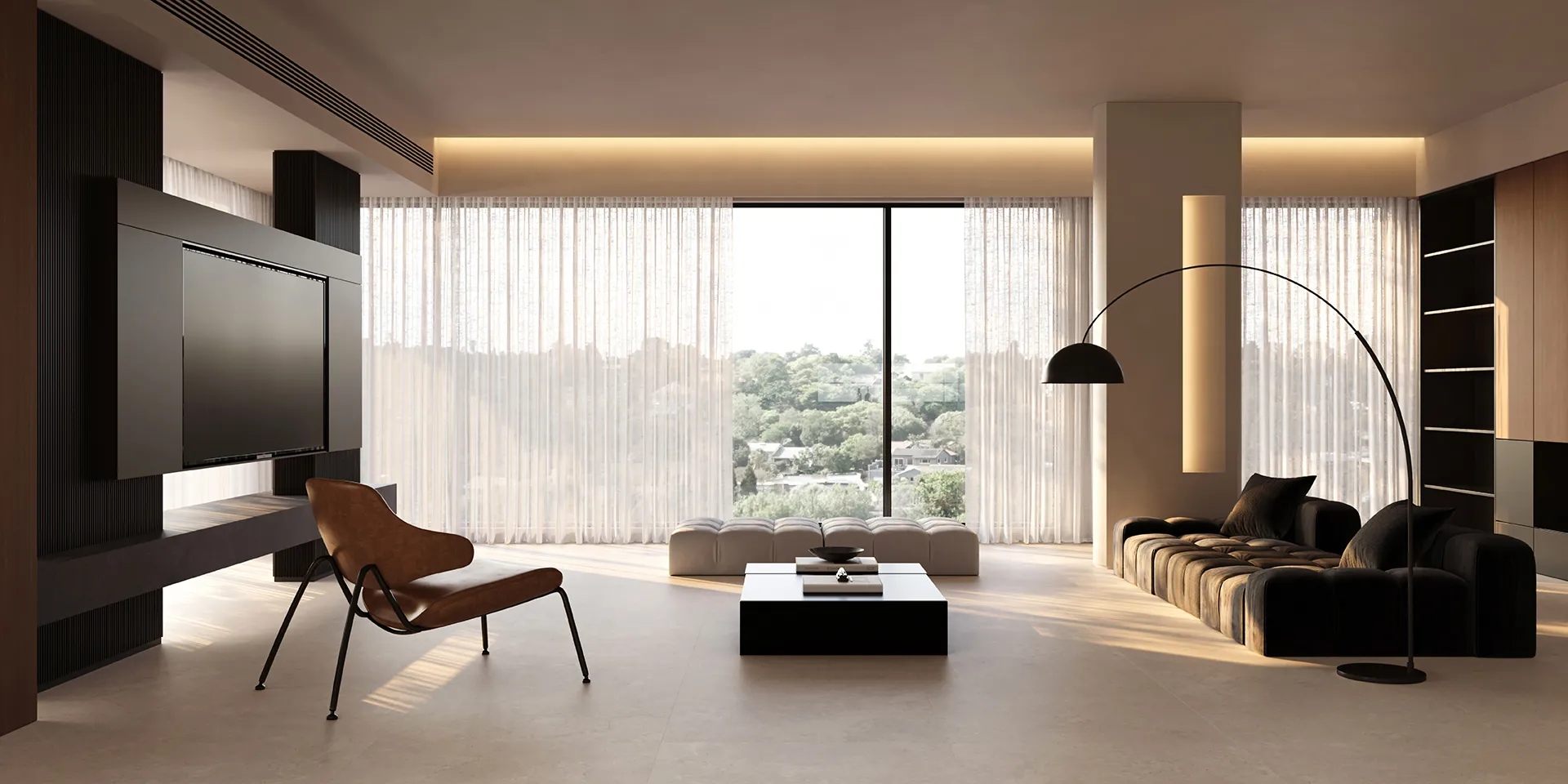
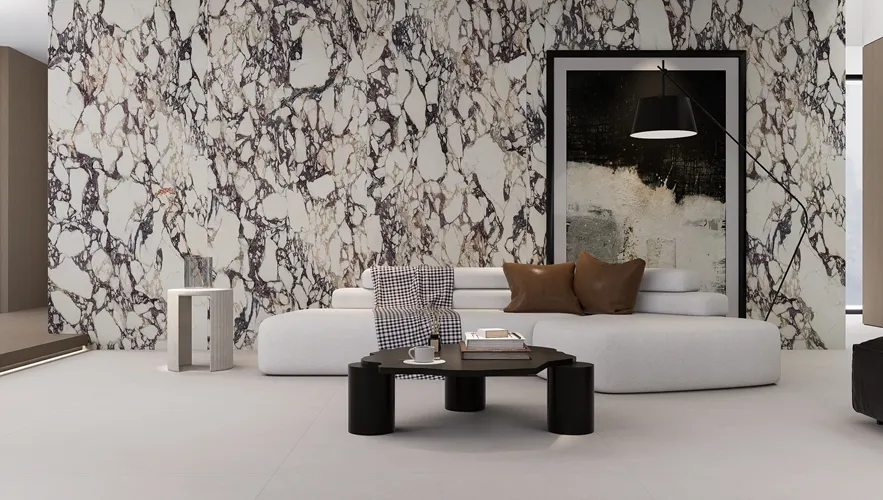
Our core offerings include ultra-thin sintered stone slabs that combine elegance with durability, ideal for modern interior and exterior designs, as well as decorative tiles suitable for residential, commercial, and public spaces. We emphasize eco-friendly production, using sustainable materials and energy-efficient processes to reduce environmental impact while delivering superior performance.
Committed to innovation, quality, and customer satisfaction, Hangzhou Rock Stone Co., Ltd. continues to support architects, designers, and distributors worldwide, providing reliable, high-performance stone and tile solutions that transform spaces with style and longevity.
Sourcing high-performance scratch-resistant surfaces from our production facilities in China offers significant strategic advantages for global B2B procurement partners, distributors, and large-scale builders:
Our facility houses modern Italian SACMI presses, high-definition digital inkjet printers, and automated continuous kilns, ensuring every slab meets dimensional tolerances of less than 0.5mm.
Leveraging China's consolidated industrial supply chain for raw minerals allows us to maintain stable, highly competitive pricing structures without compromising on material purity or performance metrics.
Unlike Western manufacturers with rigid tooling constraints, our lines are optimized for fast-changeover customization, accepting customized sizes, thicknesses, and bespoke texture requirements.
Furthermore, our geographic location in Hangzhou offers logistics advantages. Proximity to Ningbo and Shanghai ports ensures streamlined global shipping routes, reducing container transit times and domestic freight costs.
Scratch-resistant sintered surfaces are utilized across various industries, providing long-term solutions for challenging environments:
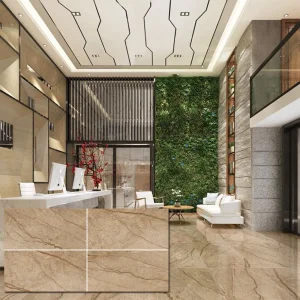
Perfect for airport terminals, hotel lobbies, and corporate plazas. Our large-format porcelain tiles resist constant foot traffic and heavy roller bags, maintaining their finish over decades of use.
Providing lightweight, UV-stable cladding panels. These scratch-resistant surfaces protect building exteriors from windborne debris, sandstorms, and thermal expansion forces.
Resistant to direct knife cuts, heat, and corrosive chemical agents. These slabs are non-porous, antibacterial, and food-safe, meeting rigorous sanitization standards.
For large-scale architectural projects, we offer engineering solutions that integrate lightweight honeycomb backers with ultra-thin sintered stone panels. This reduces weight by up to 60% while maintaining the surface's impact and scratch resistance, facilitating safer and faster installation in high-rise constructions.
The global demand for high-durability surfaces is evolving. Our R&D division focuses on aligning our product roadmap with these emerging industry paradigms:
Sourcing large volumes of architectural surfaces requires stringent verification protocols. At Hangzhou Rock Stone Co., Ltd., we adhere to strict quality control frameworks to guarantee product consistency across all production runs:
All mineral raw materials are tested for radioactive safety, grain-size distribution, and moisture content before batching, ensuring pure, consistent slurry bases.
During extrusion and firing, sensors monitor slab density, flatness, and kiln temperature profiles, dynamically adjusting parameters to prevent structural warping.
Every batch undergoes testing for Mohs hardness, chemical resistance (ISO 10545-13), water absorption (ISO 10545-3), and breaking strength before packing.
For international shipments, we secure all large-format slabs in custom-built, heavy-duty wooden A-frames. These are reinforced with steel tie-downs and protected by shock-absorbing corner guards to prevent chipping or fractures during ocean transport.
Discover our comprehensive selection of high-durability floor, wall, and cutting-tool systems.
 Rock Stone